Anthony Caro & James Capper
Heavy Metal
Open from 7th June
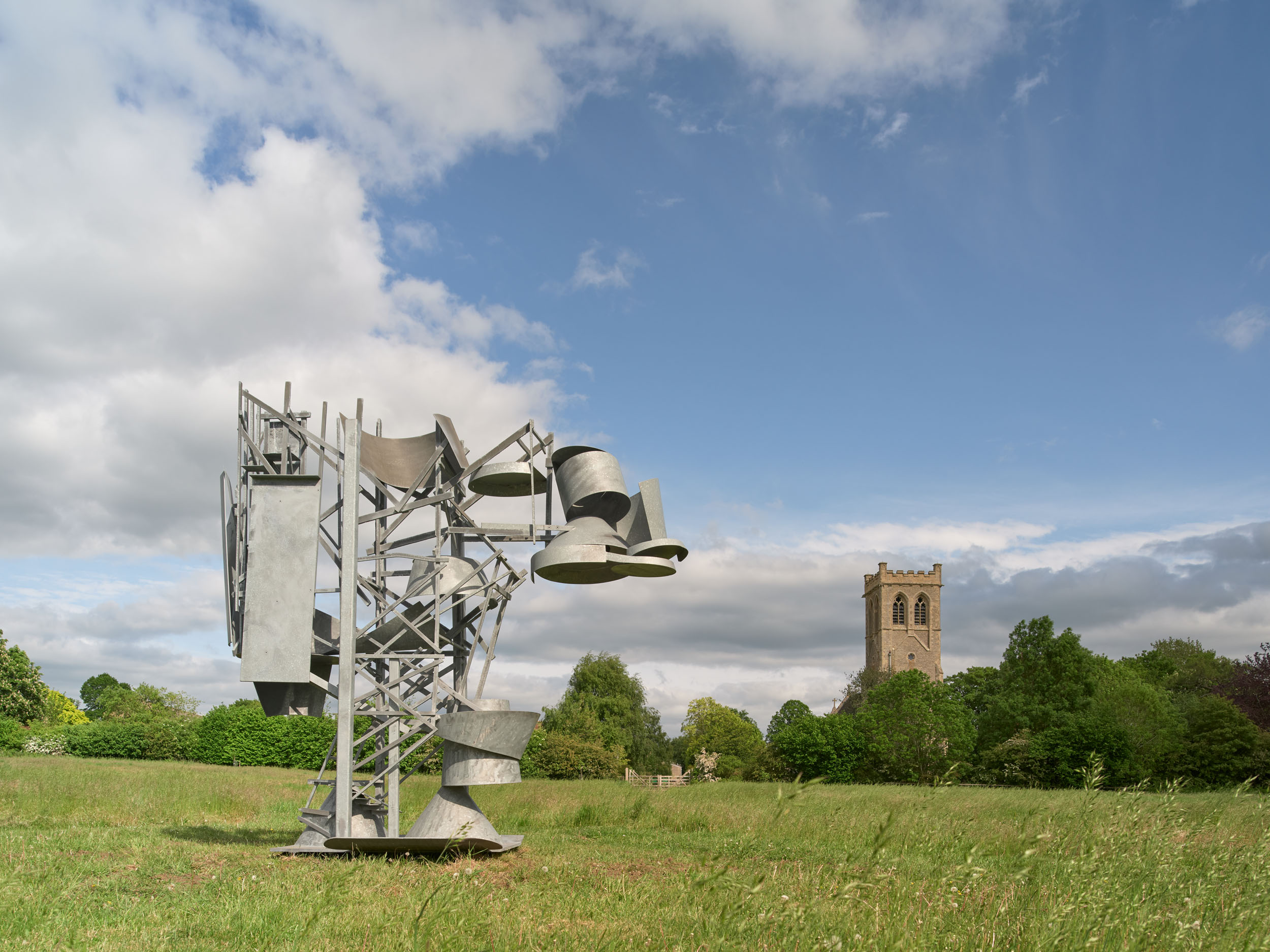
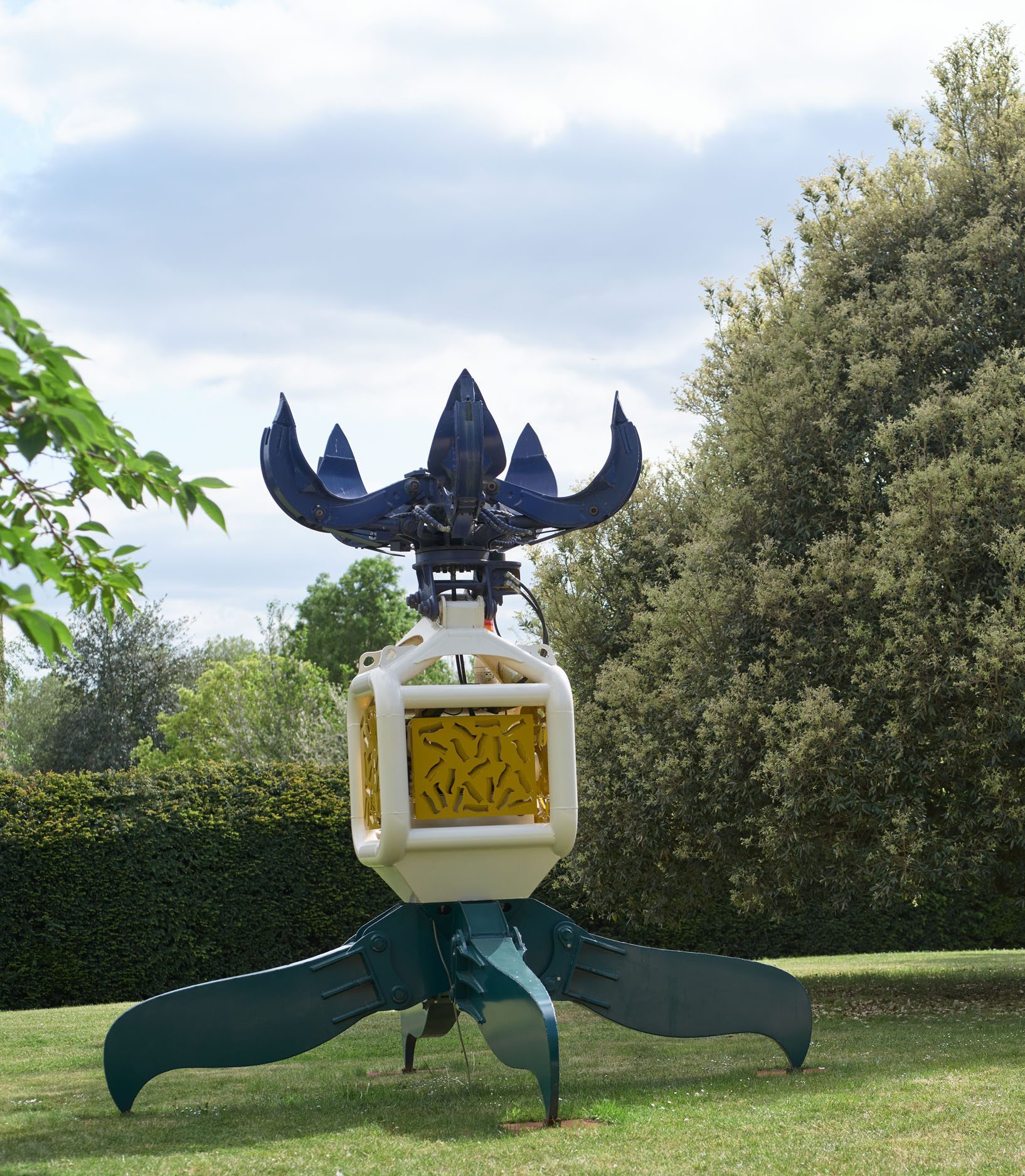
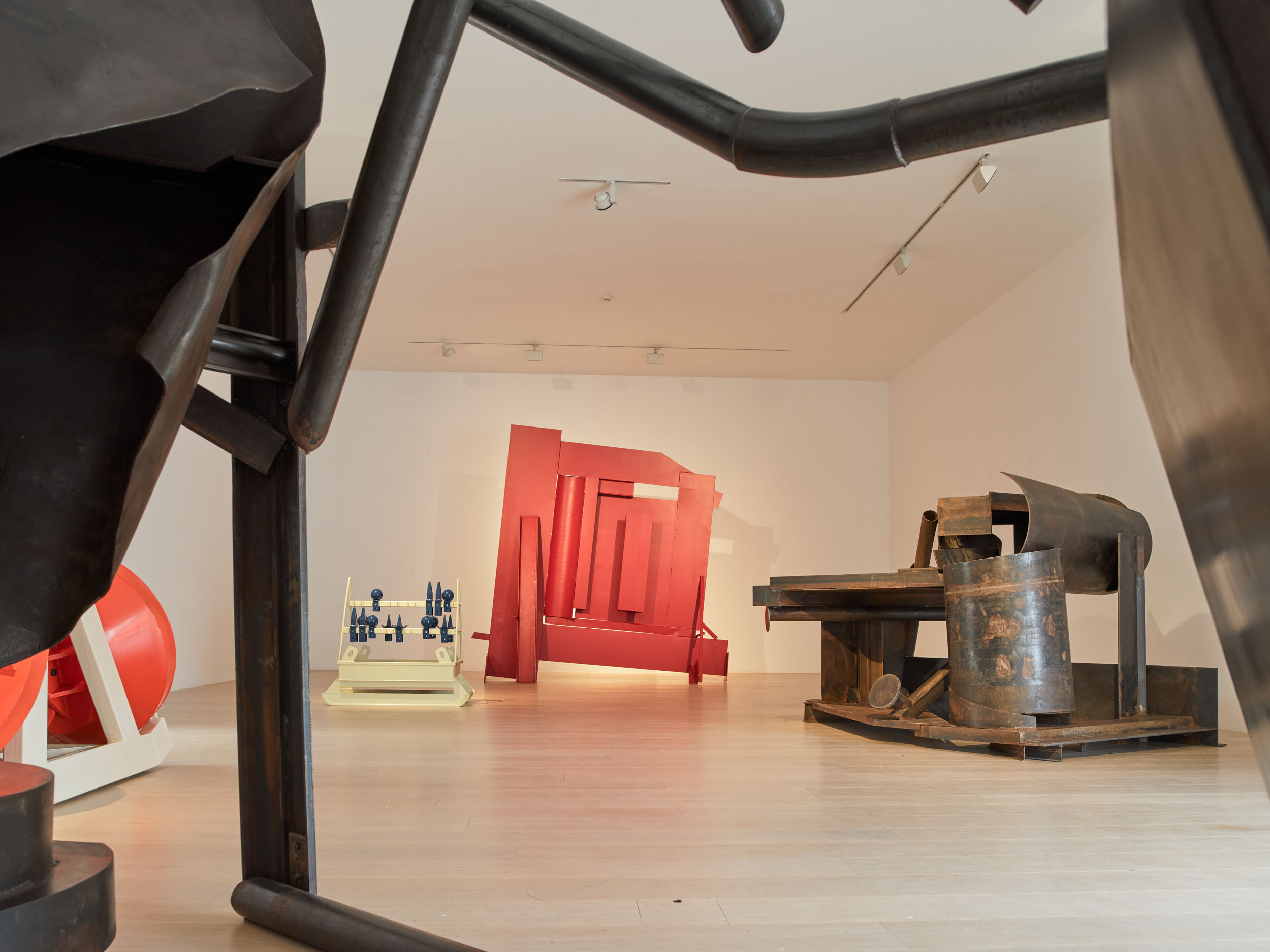
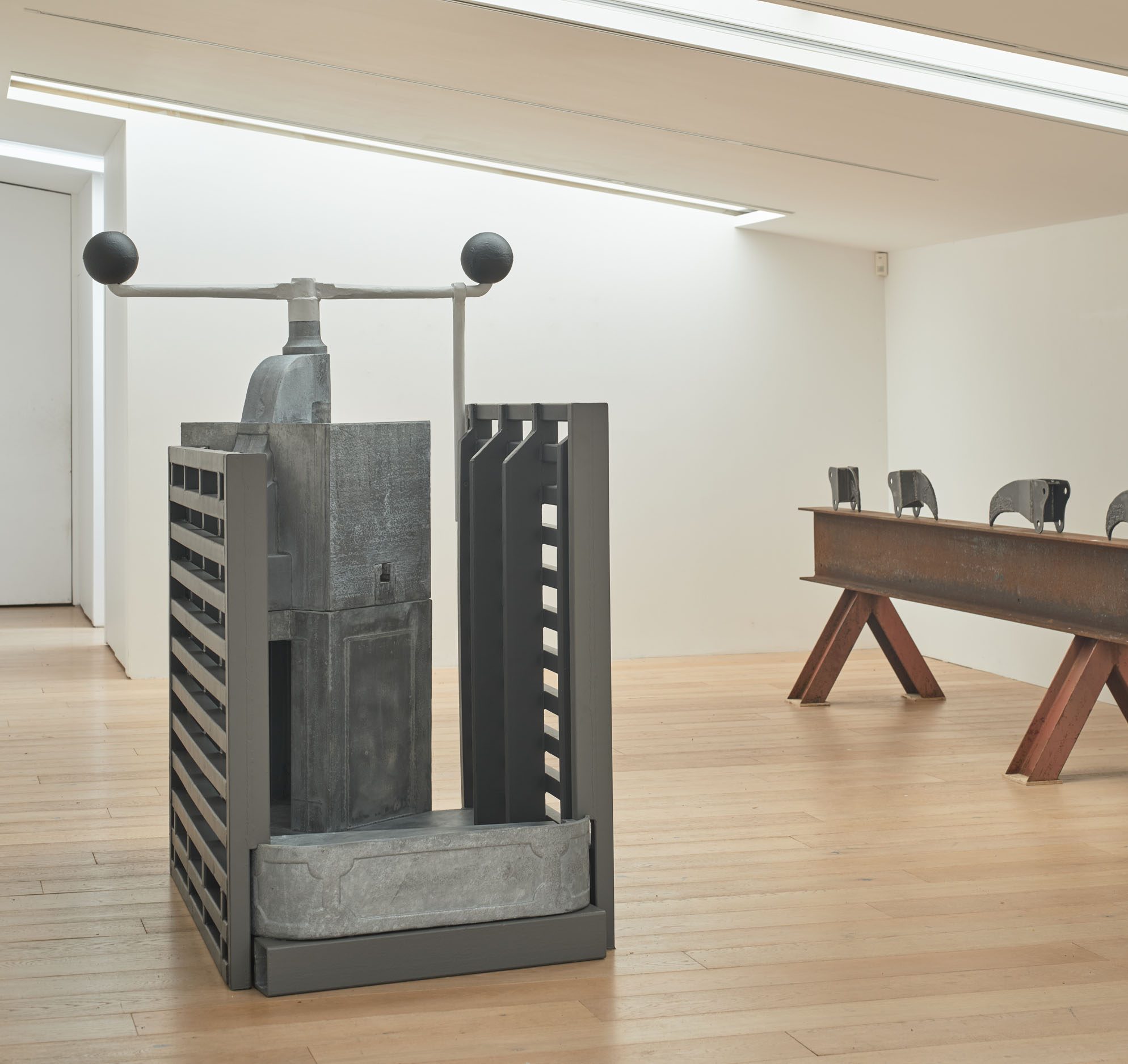
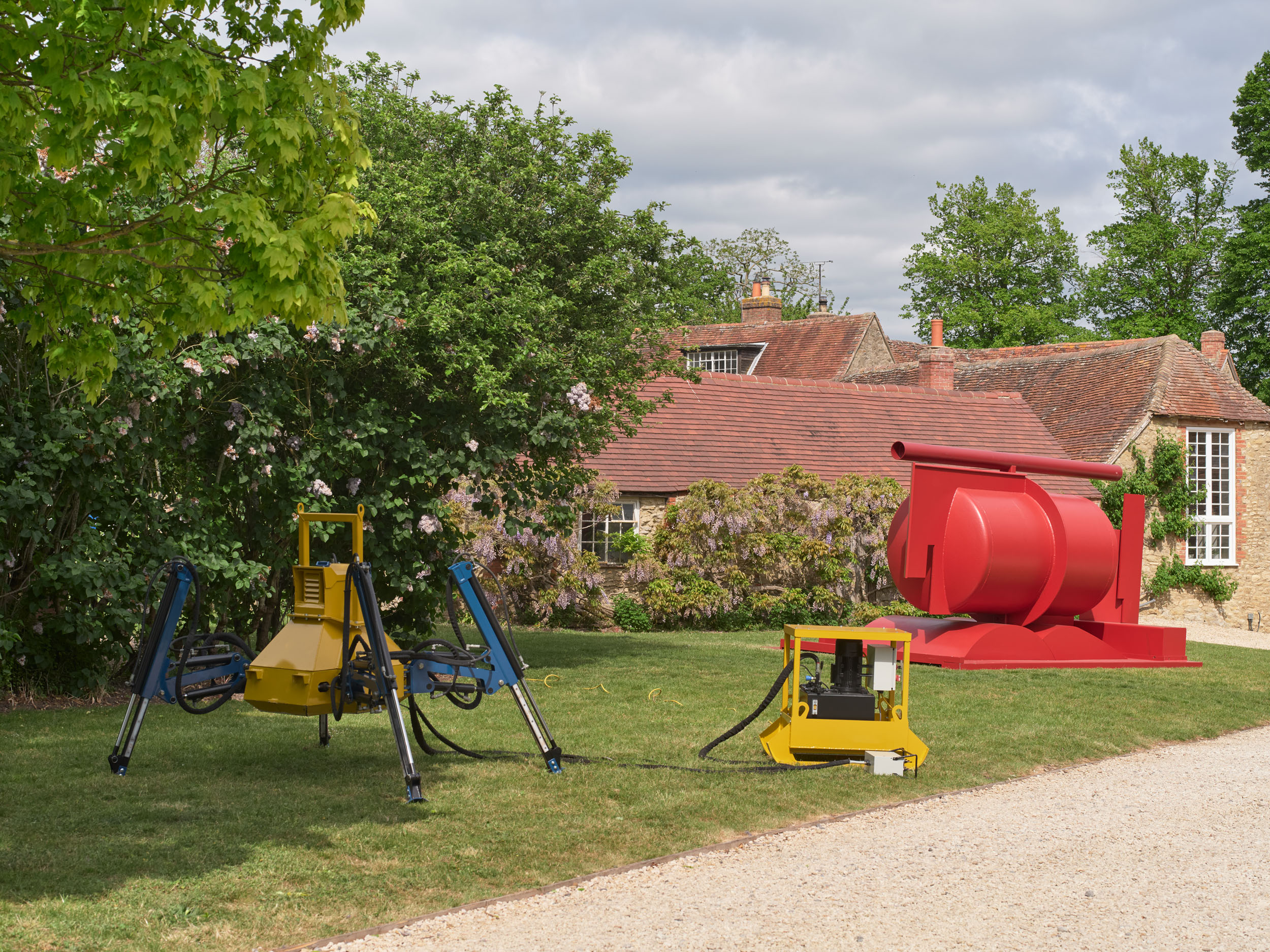
Heavy Metal brings together seminal work by Anthony Caro (1924–2013) with the pioneering practice of James Capper (b. 1987). The exhibition explores a cross-generational dialogue, tracing the evolution of British sculpture from the abstract revolution of the 1960s to Capper’s mechanical age.
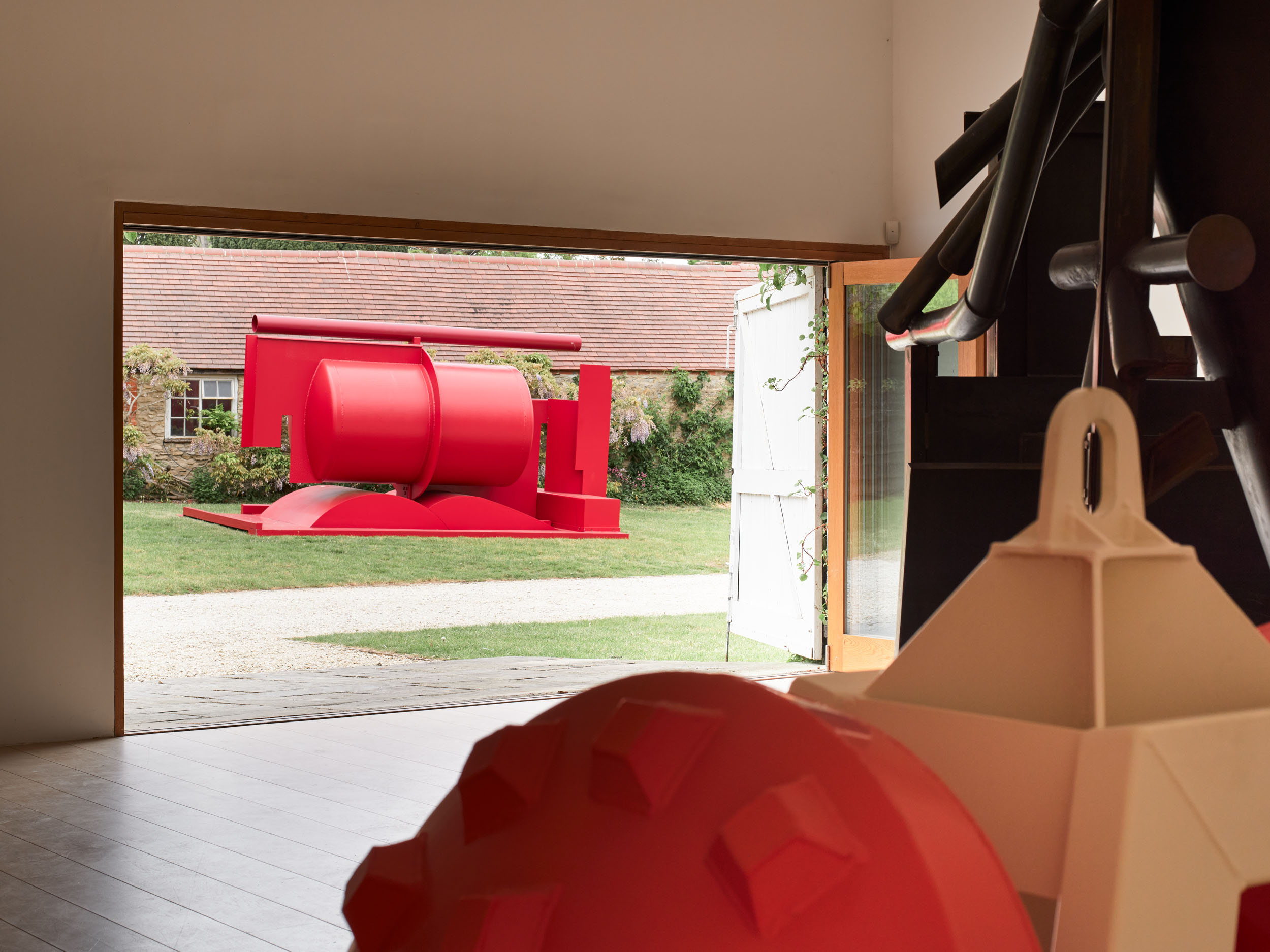
Albion Barn’s large-scale presentation of indoor and outdoor sculpture succeeds a dual exhibition at Albion Jeune in London. Drawings, preparatory maquettes and indoor sculpture are displayed across two galleries at Albion Barn, while large-scale outdoor works are exhibited in the lawn and fields. The presentation is accompanied by the publication of a new book exploring the legacy of Anthony Caro within British sculpture, and his continued influence on James Capper’s artistic practice. Heavy Metal includes an essay written by Deyan Sudjic, former director of the Design Museum.
A fundamental shift in the landscape of modern sculpture took place when Caro returned from his trip to North America, supported by a Ford Foundation Grant, at the end of 1959. He returned to the UK with a clear ambition to continue the rule-breaking dynamism of his transatlantic contemporaries within the context of British artistic practice.
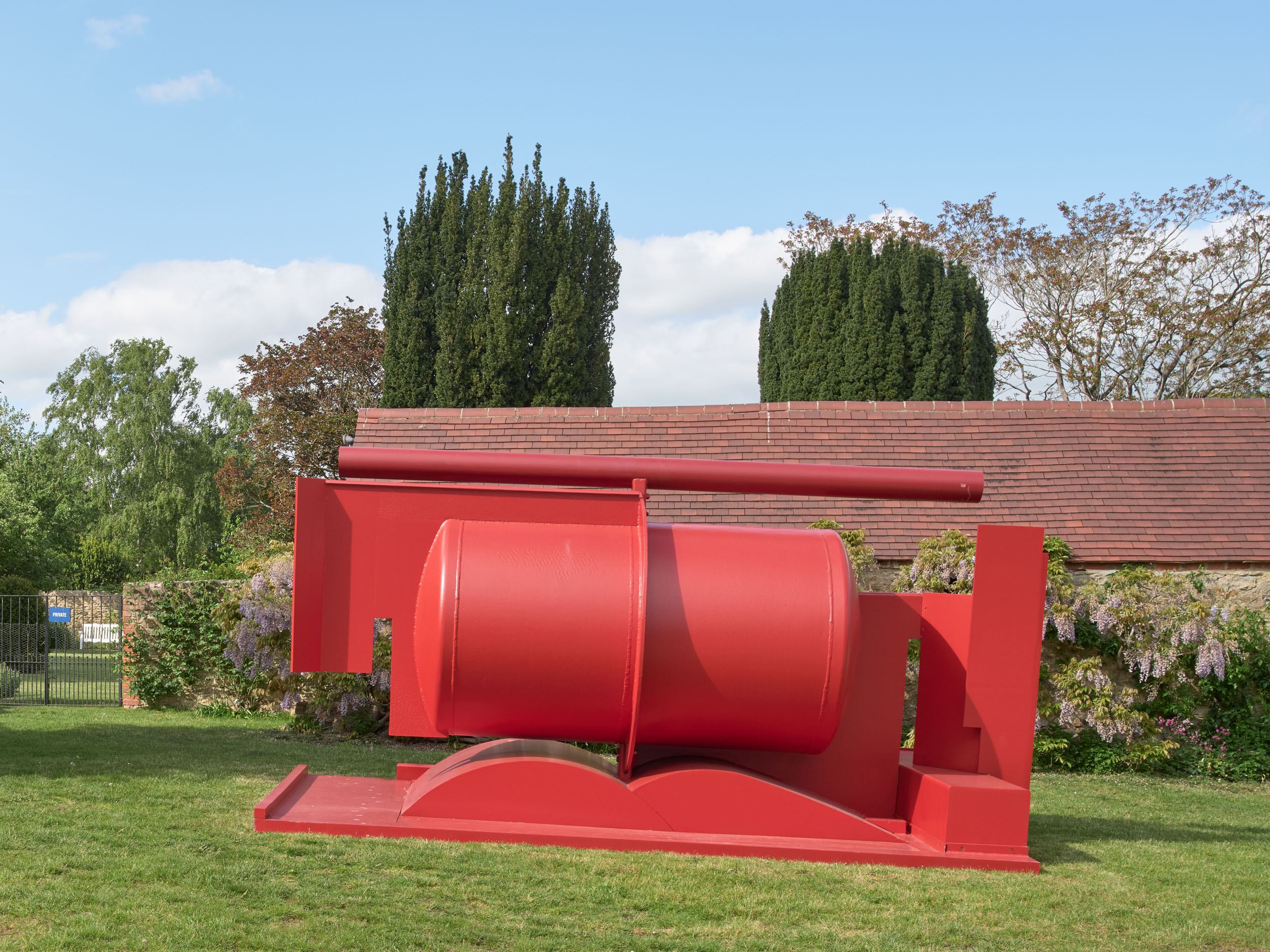
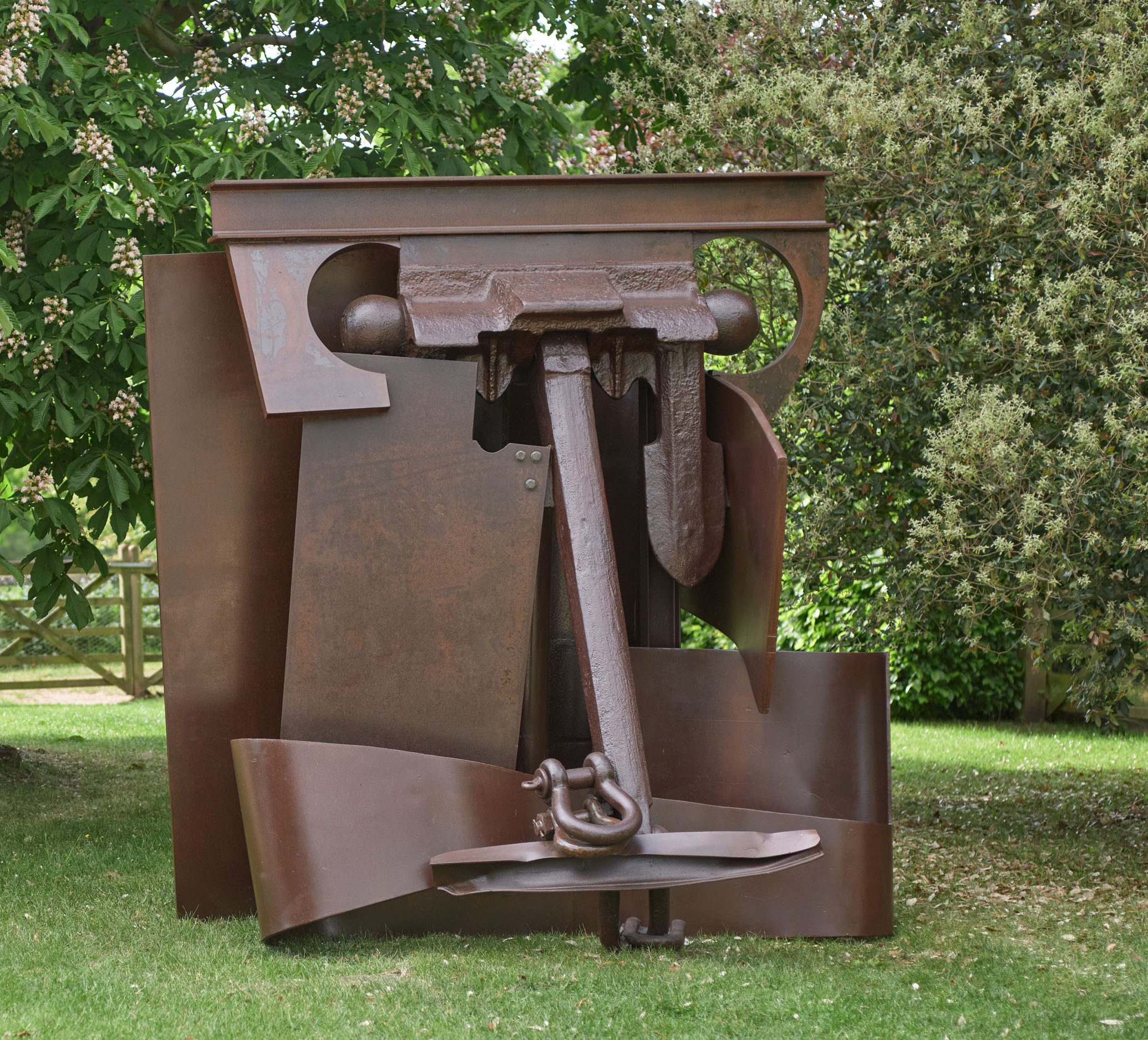
Heavy Metal features seven of Caro’s large-scale sculptures, demonstrating his mastery of an industrial vocabulary that rejected traditional materials and processes in favour of raw, welded steel and block colour rendered in industrial paints. This approach is visible in works spanning decades. Both Caro’s Vespers (1972–1974) and his Aurora (2000–2003) illustrate his striking use of block colour. In contrast, Caro’s Park Avenue Series: Towards Morning (2011–2012) explores the raw, unpainted surface materiality of steel and sets it in relation to the architectural urban environment. Across his oeuvre, Caro used surface and colour to unify found elements for a cohesive emotional and aesthetic impact.
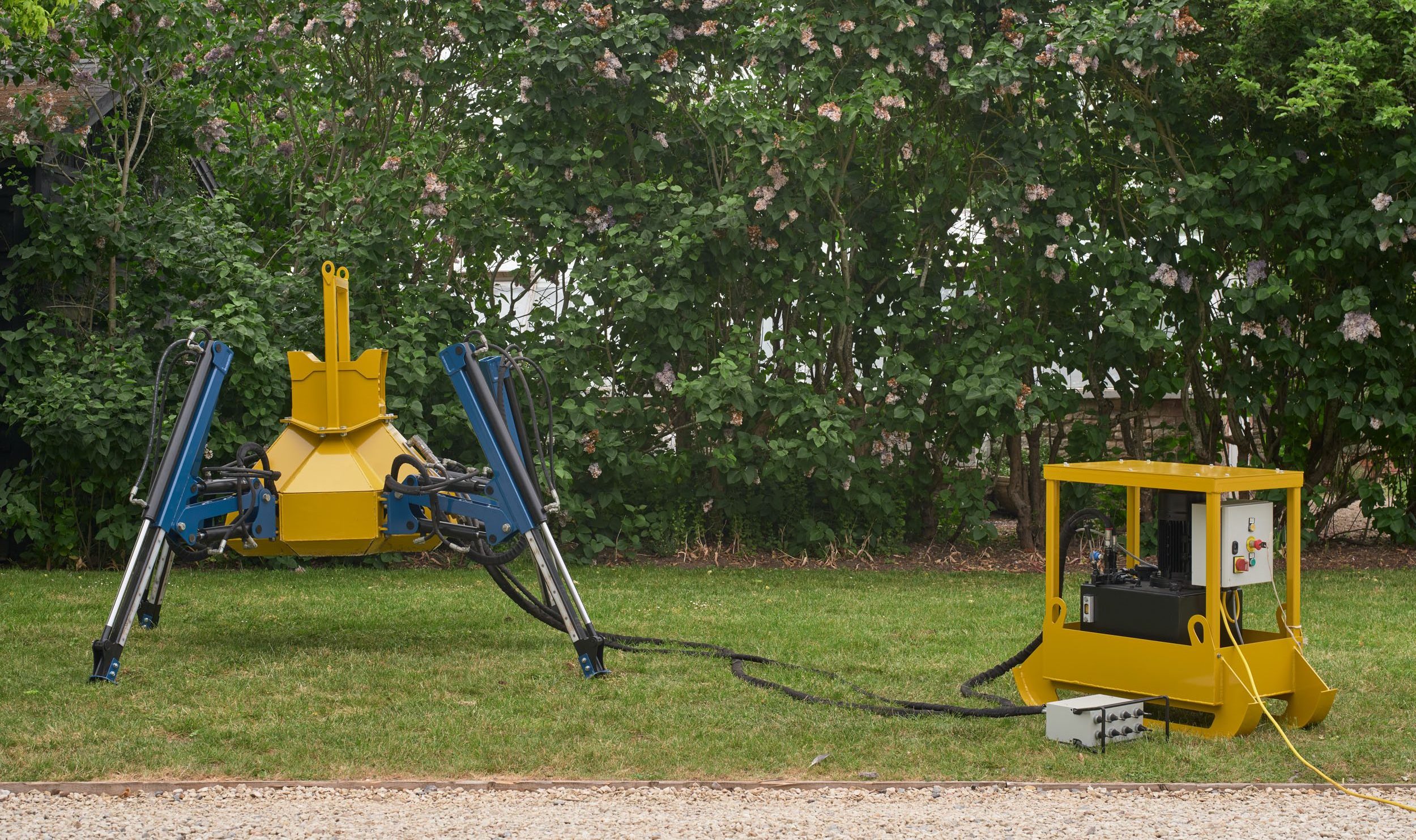
Not only did he meet Caro, but Capper was able to exhibit the movement of one of his early MOBILE HYDRAULIC SCULPTURES before him at Let There Be Sculpture!: in collaboration with the Hannah Barry Gallery, at the New Art Centre at Roche Court Sculpture Park in August 2010. This critical moment serves as a benchmark from which the development of his practice can be explored. Since then, Capper has continued to work with industrial materials on a small and large scale. IRIS, which is on view at Albion Barn, is displayed alongside preparatory drawings and maquettes of the work, demonstrating Capper’s process from idea to 2D image, through to a fully functioning heliotropic sculpture. Painted in block colours of marine paint, and produced using steel and various other metals, the visual and material influence of Caro is evident. However, IRIS is also symptomatic of what makes Capper’s sculptural practice so distinct. The work looks towards utility.
Though each of Capper’s works is comprised of carefully crafted sculptural elements, his large-scale sculptures use hydraulic movement and power and are designed to emulate carefully studied biological processes. Capper himself categorises his work within numerous “divisions” which consider function as the defining element of his practice.
Exhibiting Capper alongside Caro presents a fruitful dialogue. Caro’s career moved British sculpture away from traditional processes of casting by repurposing scrap industrial material for use in abstract sculpture. Capper’s own practice has adopted the material possibilities that Caro’s pioneering influence allowed, considering the utility that sculptures and artistic practice may offer. At Albion Barn, this conversation takes form across the galleries and the surrounding landscape.
Anthony Caro (b. New Malden, 1924, d. London, 2013) played a pivotal role in the development of twentieth-century sculpture. In the early 1960s, he began making brightly painted, abstract steel structures that he positioned directly on the floor, the omission of a pedestal marking a radical shift in the dynamic between work and viewer. Using prefabricated steel elements salvaged from scrap yards alongside found objects from his material surrounds, Caro developed new ways of making sculpture that would be more immediately expressive. Throughout his career Caro worked extensively in steel but also in a diverse range of other materials including bronze, silver, lead, clay, stoneware, wood, paper and perspex.
Caro’s constant reinvention of the language of sculpture, as well as his influential teaching at St. Martin’s School of Art in London, distinguished him as the successor to artists such as Henry Moore and David Smith. This also led to major collaborations with architects Frank Gehry, Tadeo Ando, and Norman Foster, the latter of whom he worked with on the Millenium Bridge (1997-2000) alongside engineers Arup. At the turn of the millennium Caro engaged in multiple large-scale series of narrative works including The Last Judgement (1995-99) and The Chapel of Light (2008) in Beaubourg, France.
Mid-career retrospectives of Caro’s work were held at the Hayward Gallery, London (1969), and Museum of Modern Art, New York (1975). In 1992, the British Council organized an exhibition of his sculpture in the ancient setting of Trajan’s Market in Rome, followed by a major exhibition at the Museum of Contemporary Art Tokyo, in 1995. In celebration of Caro’s eightieth birthday, Tate Britain, London, staged a retrospective in 2005. In 2011, a selection of works dating from 1960 through 2010 were exhibited in the Roof Garden of New York’s Metropolitan Museum of Art. Caro’s 2013 retrospective at Museo Correr, Venice, coincided with the 55th Biennale di Venezia and was on view at the time of the artist’s death. In 2015 The Hepworth Wakefield and Yorkshire Sculpture Park held a joint retrospective to celebrate and commemorate Caro’s life and work. Knighted in 1987, he was awarded the Praemium Imperiale Prize for Sculpture by the Japan Art Association in 1992, and was inducted into the Order of Merit in 2000—the first sculptor to be so since Henry Moore in 1963.
James Capper (b. 1987, London) uses his background in agricultural mechanics to fabricate large-scale mobile sculptures. Trained as a welder and a graduate of the Royal College of Art, Capper’s work combines drawing with speculative engineering and biology, producing mobile sculpture. These operate within ‘divisions’ of engagement with the world in Earth Marking, Aviation, Materials Handling, and Offshore environments. Each ‘division’ develops from a prototype, both technically and aesthetically, as Capper constantly experiments with new engineering solutions.
Solo exhibitions of the artist’s work have taken place at the Royal Academy of Arts, London (2024); Albion Jeune, London (2024); Albion Barn, Oxford (2022); Alex Eagle Studio, London (2022); MONA, Barriedale (2021); Forth Arts Residency, Sydney (2019) Hannah Barry Gallery, London (2018); and Bathurst Regional Art Gallery, Bathurst (2017), among others. In 2020, the artist was commissioned by the Battersea Power Station to create MUDSKIPPER WALKING WORKBOAT, and in 2023 he was commissioned by Gallery Town to create Camellia, presented by Nicholas Serota.
The artist participated in group exhibitions held at Hannah Barry Gallery, London (2022); Safehouse 1, London (2022); Alma Zevi, Venice (2021); Albion Barn, Oxford (2021); Serpentine Galleries, London (2018); and the Science Museum, London (2018), among others. In 2011, James Capper received the Royal Society of British Sculptors Bursary Award. In 2009 he was the youngest artist ever awarded The Jack Goldhill Prize for Sculpture from the Royal Academy of Arts and was nominated for the Jerwood Sculpture Prize. In 2023, Capper was the only artist presented at the Science Museum in an exhibition on leading engineers, globally. His work is held in the Science Museum’s permanent collection.